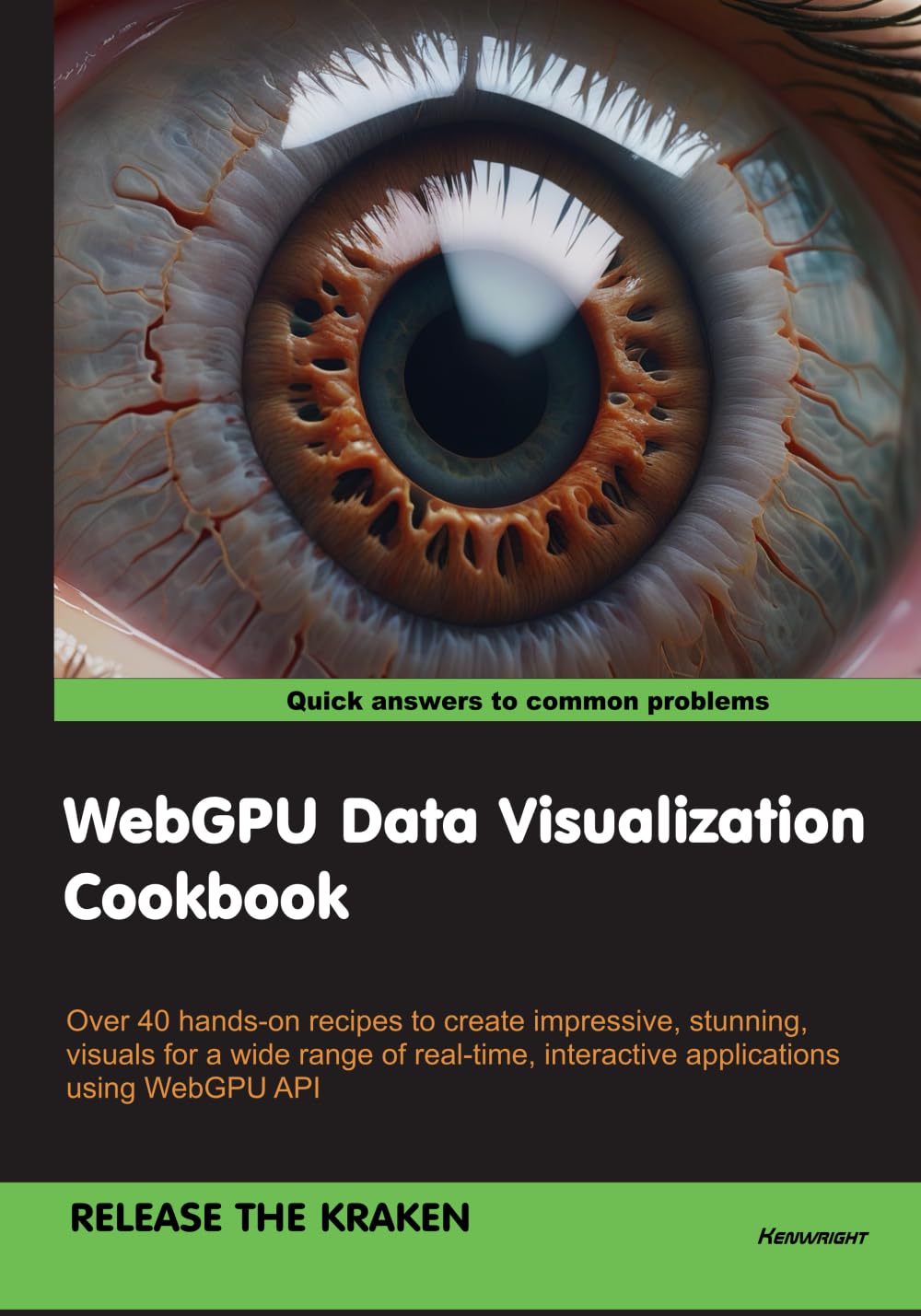
A compelling exploration of webgpu and its impact on the modern technology. This essential read offers fresh perspectives and practical insights that will transform your understanding.
What sets this book apart is its ability to connect wgsl with real-world scenarios, providing readers with actionable insights they can immediately implement. The book's title, "WebGPU Data Visualization Cookbook (2nd Edition)", reflects its central theme: a bold exploration of ideas that challenge conventional thinking and encourage intellectual growth. This comprehensive work delves deep into the core concepts of webgpu, offering readers a unique perspective that bridges theoretical knowledge with practical application. Readers will appreciate the author's ability to weave storytelling with scholarly insight, creating a rich tapestry of knowledge that is both informative and engaging.
This book challenges conventional thinking and offers a refreshing new framework.
Each chapter builds on the last with such clarity that I couldn’t put it down.
That section was brilliant. I've already applied those techniques with great success.
November 28, 2025
As someone who's been in the industry for 15 years, I found fresh perspectives and actionable insights on every page. Highly recommended for professionals.
Same here. It’s rare to find a book that’s both intellectually rigorous and emotionally engaging.
December 11, 2025I had the same experience. The practical exercises really helped solidify the concepts.
December 3, 2025Stay updated with the latest from the book world
These are the best book covers of 2025 (as chosen by some of the industry’s best cover designers). | Lit Hub Design Why To the Lighthouse is Vi...
Read MorePirate of the Caribbean Johnny Depp, who drifted out to sea after allegations of abuse, recently announced he’s producing an English language film b...
Read MoreHappy Friday! We’ve been so deep in end of the year lists over here that it’s hard for me to type “Friday” and not to immediat...
Read MoreEnhance your reading and learning experience
Use the Feynman Technique: teach what you learn to someone else to identify knowledge gaps.
Use a pointer or your finger to guide your eyes. This can increase reading speed by 25%.
Rubber Duck Debugging: explain your code line by line to an inanimate object.
Follow the 20-20-20 rule: every 20 minutes, look at something 20 feet away for 20 seconds.
Write documentation as if the next person reading it is a violent psychopath who knows where you live.
Take brief notes after each chapter. Summarizing helps cement knowledge.
Sarah Johnson
Professional ReviewerAbsolutely! The author's tone made it feel like a conversation rather than a lecture.
December 10, 2025